Open Pageflow in new window

We are happy to host the artist in residence program subnetAIR at the Center since spring 2016. This program is curated by subnet, a renowned platform for media art and experimental technology, supporting artistic and cultural discourse with and about digital technology and its societal relevance.

subnetAIR provides international artists an opportunity to spend four to six weeks in Salzburg to develop an artistic project in the realm of physical computing, hardware-hacking and tinkering. subnetAIR provides curation, budget, and experience in media projects as well as an established network in the local artistic community. Starting with the 2016 residents, we have joined forces with subnetAIR and provide the artists with a lively environment filled with technology-enthusiasts, critical thinkers, exotic human-machine interfaces and plenty of gear and space to work on projects as well as present them to audiences in the Science City.

News: http://subnet.at/subnetair

2020

Agnes Wojtas (PL) wurde 1982 in Frankenstein bei Breslau in Polen geboren. Nach der Vollendung ihrer Hochschulreife studierte sie Psychologie, Sozialkunde und Polonistik an der Pädagogischen Universität, sowie an der Jagiellonen-Universiät in Krakau. Nach ihrem Abschluss ging sie nach Braunschweig, wo sie an der HBK die Freien Künste unter anderem bei Bogomir Eckes, Monika Grzymala und Ulrich Eller studierte und 2017 als Meisterschülerin von Ulrich Eller in „experimenteller Zeichnung und Klang“ ihr Diplom abschloss.
April/May 2020

Nora Jacobs (AT)  works among other things as an actress, performer and video artist. In her works she deals with the theme of the border. Nora Jacobs does not think of the border as a dividing line, but as a three-dimensional space, an intermediate space in which anything is possible. An utopia is created. The in-between is empowered and withdraws its meaning from the border until it destroys itself. Space is created for something new.
Gender, curtains, opposites, places that unite beginning and end in themselves at the same time, the foreign and familiar in recurring interdependencies – previously marking a boundary – become obsolete and dissolve. These terms are part of a social construct with which she dealt in her works and which she tries to question and challenge.
May 2020

Chun Shao (CN) studied Fine Arts at the Academy of Art in Hangzhou in China and graduated from the School of Art Institute of Chicago in the Performance Department. In 2019, she received her PhD in Philosophy from the University of Washington at the Center for Digital Arts and Experimental Media. From 2014 to 2018, Chun Shao taught at the University of Washington in Seattle, along with numerous exhibitions, awards, and residencies. In 2019 she worked as FeralAIR at the Schmiede in Hallein and will return to Salzburg in 2020 as subnetAIR.
June/July 2020

Katsuki Nogami (JP) was born in 1992 in JAPAN. Katsuki was participant at Olafur Eliasson’s Institut für Raumexperimente in Berlin Art University and was a researcher of Topological Media Lab at Concordia university. He graduated from Musashino Art University in 2015. His work were shown at FILE and  WRO , Scopitone, International image festival spain, Ars Electronica, Sapporo international art festival and Roppongi Art night.
September/October 2020

2019

Silvia Rosani and Tom Jacques  for their promising project aiming to build and extend a musical instrument beyond its own body and furthermore explore its sonic and spatial sound properties.
April 13. till May 13.

Vera Sebert  convinced us with her proposal to explore a dynamic environment where she will expand the concept of a room through virtual imagery, sound and language. We are curious to see how she will extend the idea of interactive projection by means of language.
May 15. – July 15.

Michaela Schwentner
In her artworks, Michaela Schwentner addresses the “Film” apparatus: she is the proud owner of 200 DVDs and a hard disk with cinematic treasures. This is Michaela Schwentner’s “toolbox” from which she uses excerpts: Film scenes from the author’s cinema of the 1960s / 70s and 80s are alienated, or recreated with actresses and then photographed. Using old film material, she creates new scenes which she likes to relate to literary works or photographic material.
September 16. –  Oktober 14.  2019

Mac Krebernik brings us a unique perspective of conventional and unconventional uses of contemporary and everyday technology, combining his professional understanding of interaction design with extraordinary approaches towards new media communication.
October 14. till November 30.


2018

Lale Rodgarkia-Dara continues her experimental work in the field of DIY biohacking and sonification in Salzburg.

Simon Faulhaber‘s sensitive handling of the digitised environment promises aesthetic discoveries.

Georg Scherlin approaches utopian and dystopian futures with contemporary technologies and humanities theories.

Iulia Radu and Nicolò Cervello’s project imagines what fossils of our technological present could look like.


2017

July / August

Lucie Strecker (AT)

One sophisticated look at bioengineering and performance:

Lucie Strecker, together with her collaborator Klaus Spiess, works on projects around wetware, biofacts, and new interfaces/relations to non-human (yet biological) actors.
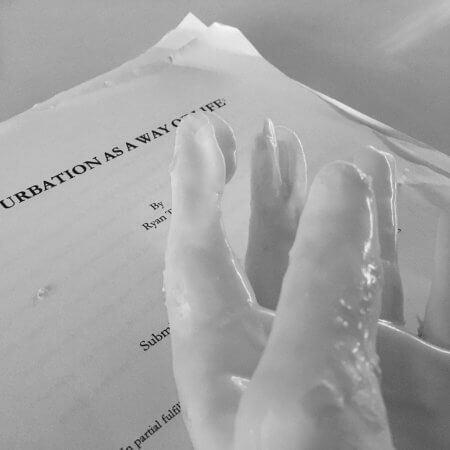
July, 12th, 2017, 6.00 pm: Meet the artist // Lucie Strecker


June 2017

Danny Bracken (US)

The MediaART Residency & Grant is a one-month project development scholarship for artists from the field of media art and experimental media. This residency & grant is a cooperation between the Artist-in-Residence-Programm der Stadt Salzburg and subnet

June 7th, 2017, 5.00 pm: Meet the artist // Danny Bracken


May 2017

Young Suk Lee (US)

One eerie wearable approach to the fields of the uncanny valley.

“My artwork employs a variety of themes focusing on nature, ecosystems, and the connection between life forms. As human beings an inescapable part of life is our interaction with other creatures. The fundamental theme in my work concerns how ecosystems, societies, and life itself form an interconnected web where the disturbance of any part affects everything. My art work do not describe the real environment in a realistic sense. Instead, I seek to depict ecosystems and environments in a surreal manner. The depictions of these entities and environments stem from personal, subjective impressions and therefore contain highly imaginative elements.” from Young Suk Lees’s artist statement.
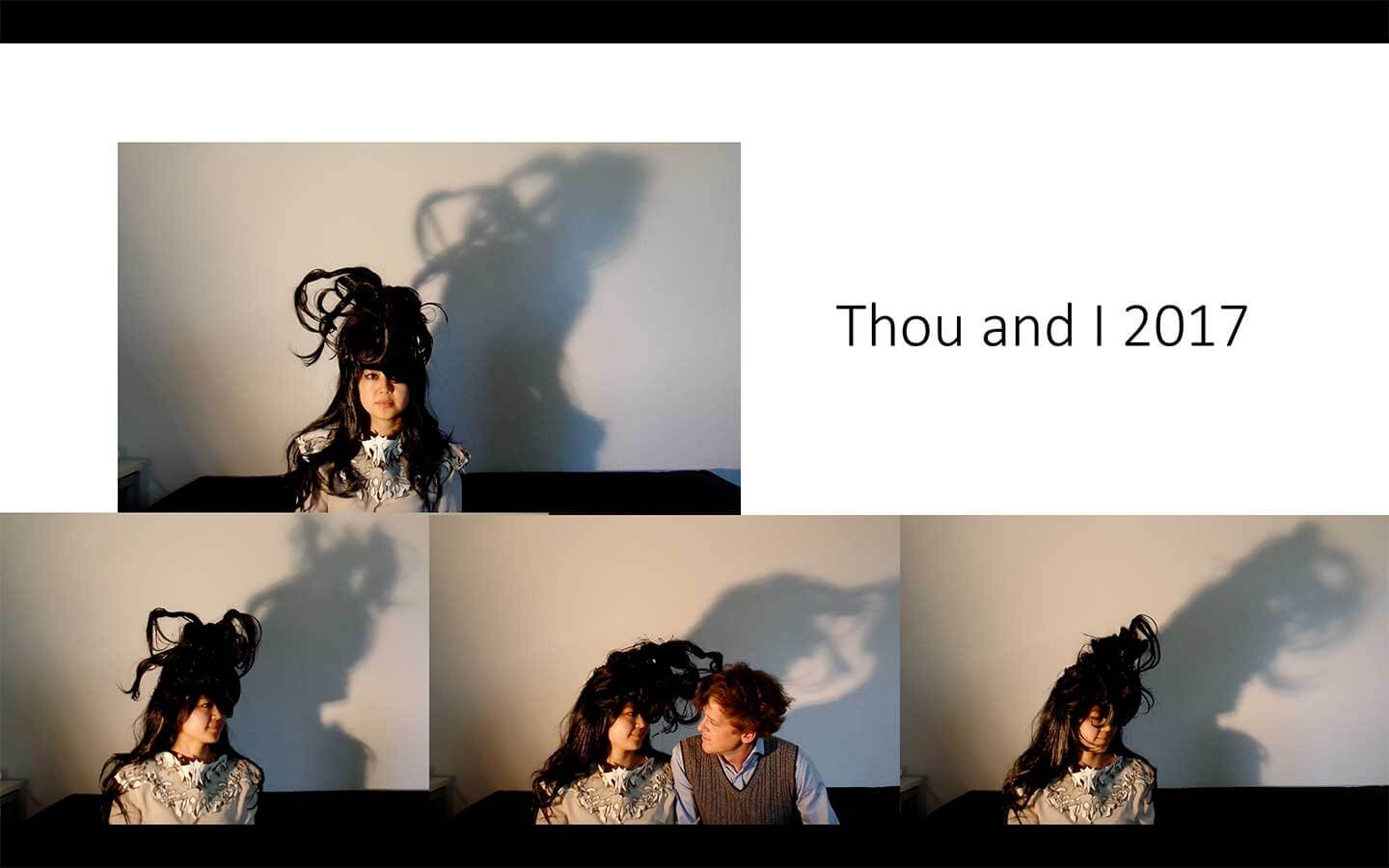
documentation

May 24, 2017, 5.00 pm: Meet the artist // Young Suk Lee


March 2017

Anthony Rayzhekov (BG/AT)
Antoni Raijekov is an interdisciplinary artist working in the field of music, theatre and digital arts born in Sofia, Bulgaria and currently living in Vienna, Austria. He has a master degree in theatre directing and bachelor in drama acting at the National Academy for Theater and Film Arts “K. Sarafov” (Sofia, Bulgaria).
He studied musical improvisation at the Vienna Konservatorium (Austria) and computer programming at LearningTree(London, UK) and was an IT consultant for the United Nations Office, Vienna. He is a co-founder of the vienna based New Media label THIS.PLAY, focused on interactive technologies and art, and guest lecturer in Interactive Media in the University for Applied Science, St.Pölten, Austria and Academy for Fine Arts (Digital Arts MA program) – Sofia, Bulgaria. He is a fellow at Akademie Schloss Solitude – Stuttgart, Germany and Akademie Hallein – Hallein, Austria, For his works, he obtained awards, fellowships and grants from ProHelvetia, Soros Foundation, ComputerSpace, Ministry of culture – Bulgaria, BKA – Austria, Akademie Schloss Solitude, Akademie Hallein, among others.

March 8, 2017, 7.00 pm: Meet the artist //  Anthony Rayzhekov

2016

September / October 2016

Laura Splan (USA)
Laura Splans proposal was chosen because of an interesting mix of transdisciplinar and artistic research, which transfers data of bio-sensors to visual and haptic objects. We are looking forward to meeting an artist who combines aesthetics, handcraft and science in a progressive way.

documentation

September 7, 2016, 7.00 pm: Meet the artist // Laura Splan


Kanari Shirao (JP / DE)
Kanari Shirao combines sound art, electrical engineering, material research and programming. He transfmors it to an object based sound installation with poetic character. In his proposal he tries to turn a dead tree into a sound installation. By hollowing it out and through electrical modification – analogue to the construction of an instrument – its sonorous inside can be perceived if listening very closely. In his accomplishments and current projects Kanari Shiraos shows imaginable competences in the fields of sound art, electrical engineering and programming. His focus points out an appropriate overlap with the content alignment of the subnetAIR residency programme.

documentation

Die Welt im Kleinen – Experiment zum akustischen Effekt- from Kanari Shirao on Vimeo.

September 1, 2016, 7.30 pm: Meet the artist // Kanari Shirao


March / April 2016

Robert B. Lisek (PL)

The artist and mathematician Robert B. Lisek critically and consistently examines technology and society.In digital systems a coincidence is a hardly synthesizable element. The proposal “Deciphering Randomness” deals with the genesis and ways of coincidence. Robert B. Lisek wants to explore its relevance in social, artistic, biological and digital contexts.
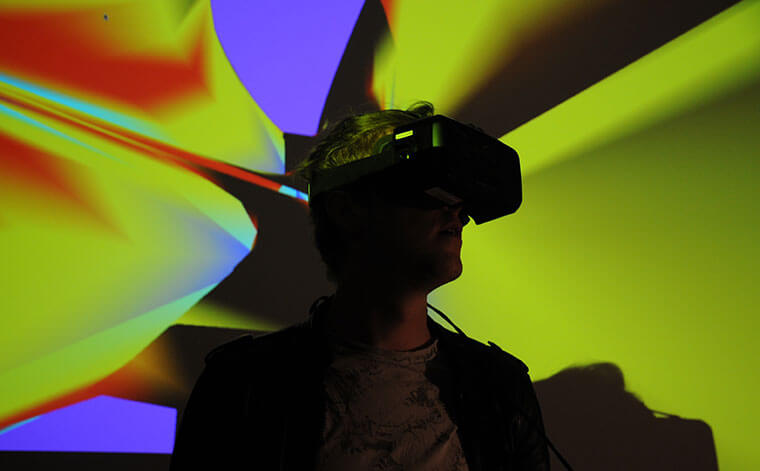
documentation

March 10, 2016, 6 pm: Meet the artist // Robert B. Lisek
Contact: Martin Murer

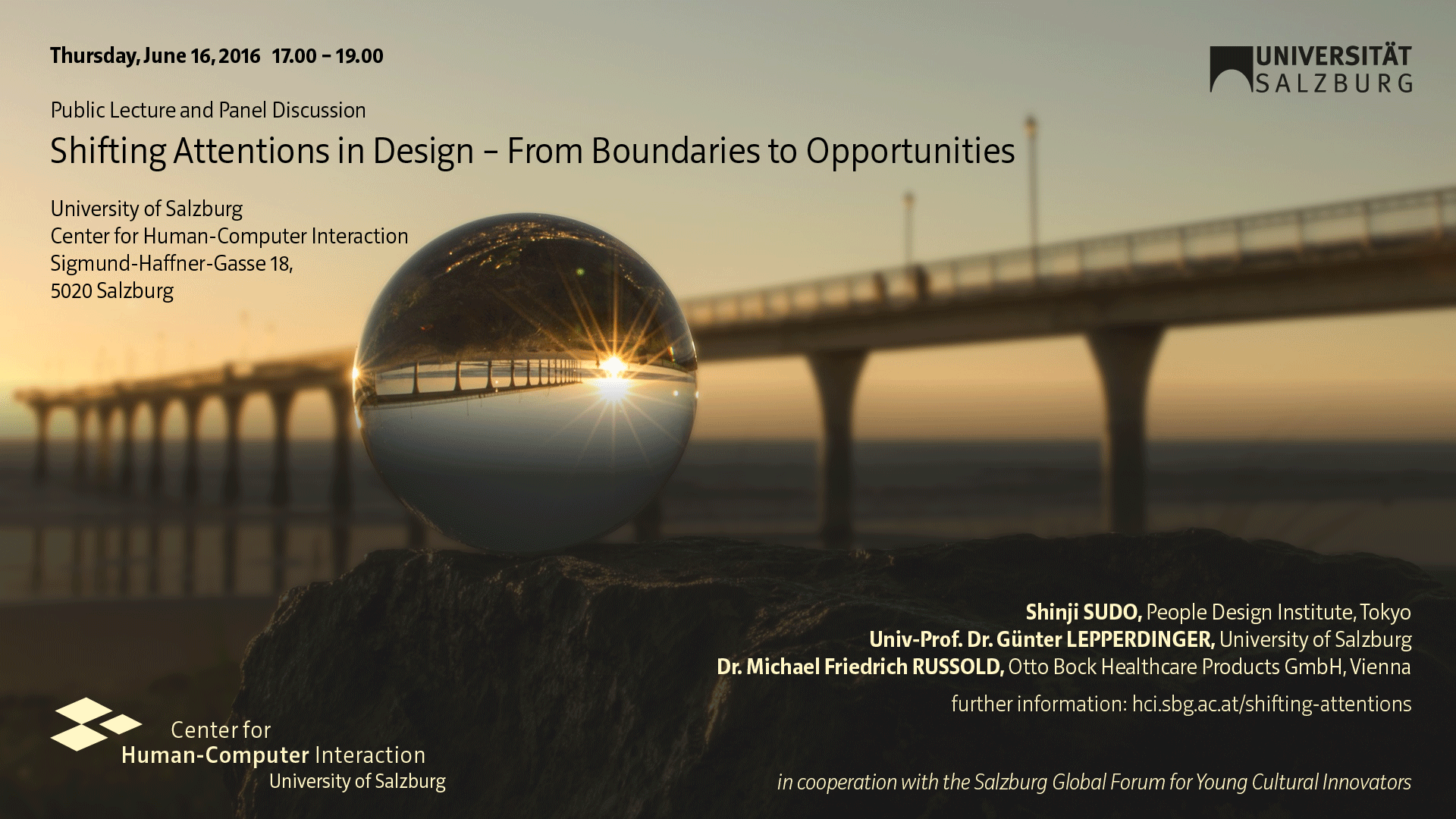
In cooperation with the Salzburg Global Seminar / The Salzburg Global Forum for Young Cultural Innovators, we cordially invite you to join us for a Lecture and Panel Discussion (open to the public) on

“Shifting Attentions in Design – From Boundaries to Opportunities”

Thursday, June 16, 17.00 – 19.00
Center for Human-Computer Interaction, University of Salzburg
Sigmund-Haffner Gasse 18, 5020 Salzburg

Following the panel discussion, the Center for Human-Computer Interaction cordially invites to continue the conversation with some drinks.

Barrier-Free in each mind

What are design challenges imposed by an ageing society? What are design challenges imposed by mild or severe impairments? How can design of technologies address boundaries imposed by varying human conditions? How can design turn such boundaries into opportunities that are of benefit for everyone (“design for all”)? How can society benefit from technologies designed for impaired people and vice versa?

This lecture and panel discussion will critically reflect upon such questions, highlighting that it is not only about designing within certain boundaries (that are, for example, imposed by the process of ageing), but that we can design for far-reaching opportunities for society as a whole. Computational and non-computational artefacts can help to eradicate boundaries that separate impaired from non-impaired people, younger from elderly people, by designing for all and being “barrier-free in each mind”.

For this discussion, we are very happy to announce that Shinji Sudo (People Design Institute, Tokyo), Günter Lepperdinger (Professor at the Department of Cytology and Physiology, University of Salzburg), and Michael Friedrich Russold (Otto Bock Healthcare Products GmbH, Vienna) will be part of this highly interdisciplinary panel discussion to reflect upon these opportunities from various perspectives.

Panelists


shifting_attentions

Contact: Martin Murer

University of Salzburg enters into research cooperation with Porsche Holding Salzburg 

Designing a unique customer experience

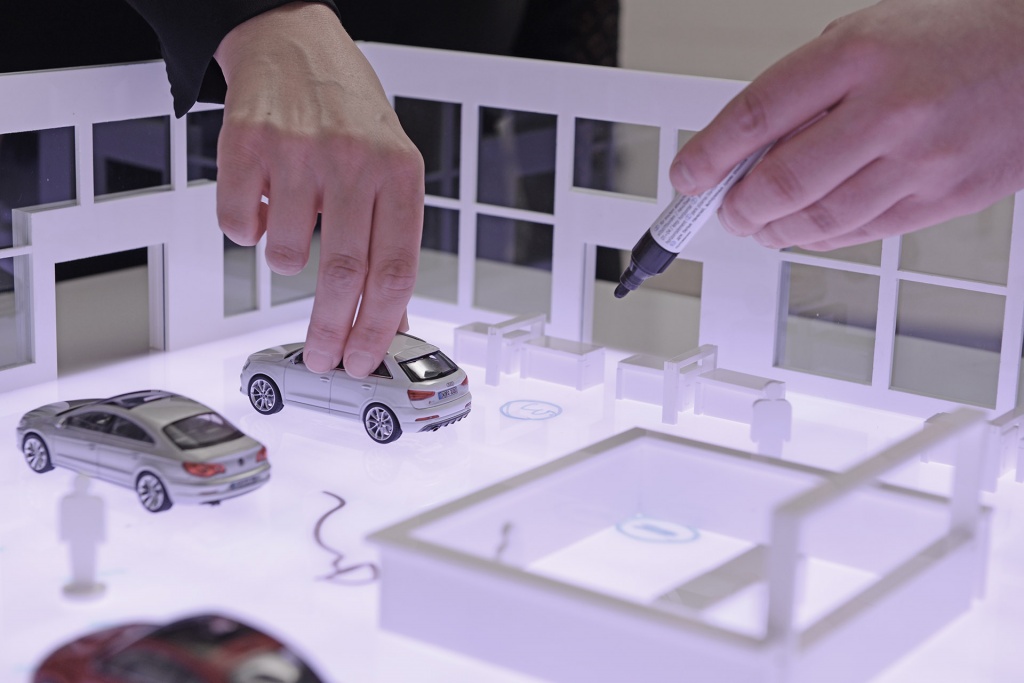
The automotive industry goes through changes. The consumer behaviour is constantly changing due to new digital opportunities. In this project, an interdisciplinary researcher team, led by Prof. Dr. Manfred Tscheligi, from the Center for Human-Computer Interaction and from the Department Chemistry and Physics of Materials, given support by qualified people from Porsche Holding Salzburg, are to investigate and develop new possibilities of digital enhancements of a traditional showrooms. On May 30th the pioneering cooperation contract was signed by Alain Favey, Porsche Holding Salzburg CEO, Professor Dr. Heinrich Schmidinger, President of the University of Salzburg, and Professor Dr. Manfred Tscheligi, Head of the Center for Human-Computer Interaction (HCI). The event was also attended by Dr. Wolfgang Porsche, Porsche Holding Salzburg, Chairman of the Board.

Two research topics

What will the showroom of the future look like? Is it possible to optimize the car buying experience and its processes by digital means? Launched earlier this year, and running until the end of 2017, the research cooperation is to answer these and other questions. Research focus is put on two topics: First all fields where there is customer contact will be analysed, and potentials will be identified. Second there will be studies on how to support Porsche Holding sales and service teams best with interactive tools such as Tablet PCs. Three Porsche Inter Auto dealer locations will participate in this test project. “When it comes to highly complex products such as vehicles, solely digital shopping using online shops for instance, will remain an exception also in the near future. The research project therefore concentrates on the special added value of a shopping experience in the showroom by enhancing interaction with the physical and sensory attributes of the product with digital content. Only when the physical attributes of real vehicles are perfectly combined with the digital ones, we can offer customers a seamless shopping experience”, says Prof. Manfred Tscheligi, explaining the need of showrooms for customers.

The concept of a joint lab shows new perspectives and allows a fresh approach to the interaction-context showroom and the purchase of cars. The Automotive Retail Lab aims at developing a future-oriented, holistic shopping experience, turnig the showroom into an interactive place. To combine digital information with physical objects, novel materials with unique qualities will be subject to the reserach in this project. Basis to this innovations are the physical nature of the show- and presentation rooms, the interaction between salesperson and (potential) customer as well as the enhancement and merging with digital interaction.

Further information: hci.plus/sites/automotive-retail-lab-en/

Contact: Martin Murer

Many kids enjoy taking apart the stuff that surrounds them to figure out how things work: they break open toys, disassemble kitchen appliances and dissect animals. Embedded technology gets smaller and smaller; the digital reality gets hidden as pictures behind glass; we grow up; and we tend to forget about the intimate relationships to artefacts we create through taking them apart. The DeconstructiveInteractionsLab at  Schmiede 2016 aims to revive some of this passion by taking apart interactive technologies and deconstructing our assumptions about how technologies are supposed to behave.  At our temporary Deconstructive Interactions Lab at Schmiede 2016 we will hack plenty interactive artefacts to pieces to create tangible alternatives of how humans interact with technology.

Schmiede16: Ausnahmezustand

September 14th – 25th 2016

Application is open till May 31st.

http://schmiede.ca/apply


WHAT?

Schmiede is a producers festival and community, a playground where our ideas come to play.

Since 2003 annually, Schmiede produces this focused collective experience far off on an island in the Austrian countryside. We provide space, time, basic tools, food, events, a heterogeneous group of participants (Smiths), guests and projects. Schmiede unites to work and connect – genre, origin, tribe, eating habits – it doesn´t matter, motivation, quality and the will to work and engage with others are the core criteria.


WHO?

Schmiede received 400+ applications in 2015.  Schmiede aimes for around 300 participants a year (numbers vary according to background eg.: a musician needs more space than a graphic designer). The SchmiedeNetwork consists of around 800 producers from over 250 nations and 5 continents. The annual mix of participants is split between 60% returning participants and 40% new participants. Our Gender numbers are just about balanced.  The age distribution lies between 18 and 45, however the majority of Schmiede participants range from 20 to 35.


HOW?

For ten days the Saline in Hallein becomes an open and free playground (2000m2) for 300+ digital creatives and artists from all around the world. Depending on the needs and possibilities of its members the SmithNetwork moves along the borders of art, culture, handcraft and creative industries. Schmiede ends with the SchmiedeWorkshow, a grand public exhibition, where the Smith productions of the past ten days are presented to the the public and media. Participation is decided according to current application. Application for Schmiede always ends on May 31st. And yes: Everyone needs to apply, every year.


WHY?

Do you have a project in mind, but don’t have the space, people or tools to realize it?

Do you want to take time to develop yourself and your projects engulfed in a large group of peers?

Do you want to meet like minded creatives to collaborate, exchange ideas or just get inspired?

Do you want to present your project or idea in front of your peers and get feedback?

Schmiede might be the right place for you to get started or continue.


Where?

Austria, Salzburg, Hallein


SchmiedePrinciples:  NETWORK, CREATE, PRESENT


Video Schmiede in 5:20: https://vimeo.com/64489715

Video Isch Mag Disch (Schmiede over the years):  https://vimeo.com/88265829

FM4 auf der Schmiede14: https://soundcloud.com/schmiede/sets/fm4-at-schmiede14
Smith interviews: https://soundcloud.com/schmiede/sets/schmiedeinterviews

Pictures: http://issuu.com/schmiede/docs/schmiede12presentation

Schmiede print: http://issuu.com/schmiede

Schmiede on fb: https://www.facebook.com/schmiedehallein

Schmiede on t: https://twitter.com/schmiedehallein


Smith videos: https://vimeo.com/groups/110342

Smith sounds:  https://soundcloud.com/groups/schmiede

Smith Photos: https://www.flickr.com/groups/schmiede/


home: www.schmiede.ca

Contact: Martin Murer

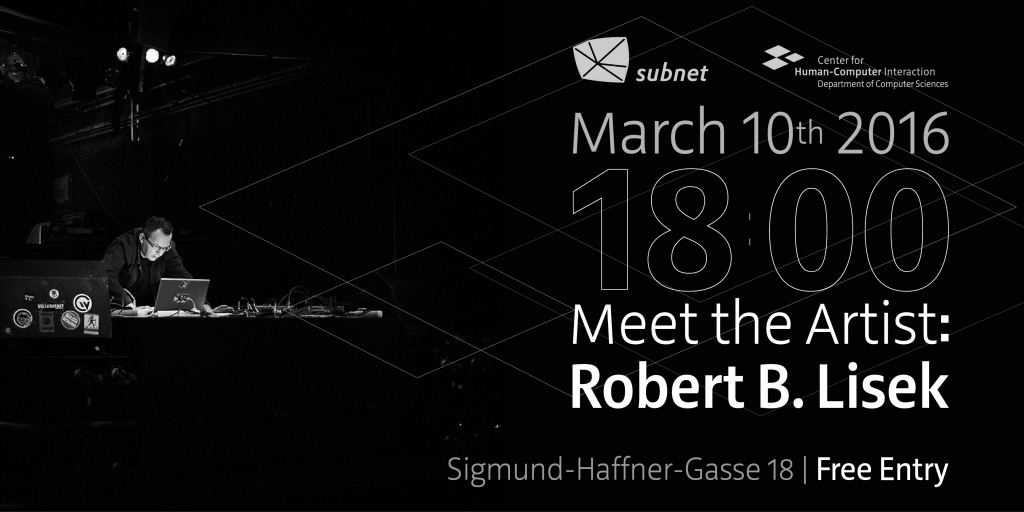
Kicking off the collaboration between subnetAIR and the Center for Human-Computer Interaction we are happy to announce a conversation with Robert B. LISEK.

March 10, 2016 18.00 | Sigmund-Haffner-Gasse 18 | free entry
Meet the Artist: Robert B. LISEK (talk/conversation)
In an informal setting artist and mathematician Robert B. Lisek, the first subnetAIR resident in 2016, will introduce himself and his work that critically and consistently examines technology and society. In digital systems a coincidence is a hardly synthesizable element. “Deciphering Randomness” deals with the genesis and ways of coincidence. Robert B. Lisek wants to explore its relevance in social, artistic, biological and digital contexts.

Lisek_Centerstage

Robert B. LISEK is an artist, mathematician and actioner who focuses on systems and processes (computational, biological, social). He is involved in the number of projects focused on critical art strategies, creative coding and interactive art. Drawing upon post-conceptual art, software art and meta-media, his work intentionally defies categorization. Lisek is a pioneer of art based on machine learning and artificial inteligence. Lisek is also a composer of contemporary music, author of many projects and scores on the intersection of spectral, stochastic, concret music, musica futurista and noise. Lisek is also a scientist who conducts a research in the area of foundations of science (mathematics and computer science). His research interests are category theory and high-order algebra in relation to artificial general intelligence. Lisek is a founder of Institute for Research in Science and Art, Fundamental Research Lab and ACCESS Art Symposium. Author of many exhibitions and concerts, among others: NUCLEAR RANDOM GENERATOR – Harvestworks Arts Center New York, Fluc Wanne Vienna, RADICAL MIND – Columbia University New York, TERROR ENGINES – WORM Center Rotterdam, Secure Insecurity – ISEA Istanbul; DEMONS – Venice Biennale (accompanying events); Manifesto vs. Manifesto – Ujazdowski Castle of Contemporary Art, Warsaw; NGRU – FILE, Sao Paulo; NEST – ARCO Art Fair, Madrid; Float – DMAC Harvestworks and Lower Manhattan Cultural Council, NYC; WWAI – Siggraph, Los Angeles; Falsecodes – Red Gate Gallery, Beijing; Gengine – National Gallery, Warsaw; Flextex – Byzantine Museum, Athens, FXT- ACA Media Festival, Tokyo and ISEA, Nagoya.

http://fundamental.art.pl

http://lisek.bandcamp.com

Contact: Martin Murer

In September 2015 the center hosted a 2.5 day event on „Rethinking Technology Innovation: Factories, Fabrication & Design Research”. A group of approx. 25 researchers and practitioners met for disucussions in round-table sessions, working groups, as well as a public event open to other interested stakeholders. (more…)

Contact: Martin Murer

We will co-organize a Workshop at the conference on Critical Alternatives in Aarhus, Denmark, in August 2015:

The Future of Making: Where Industrial and Personal Fabrication Meet

This one-day workshop seeks to reflect on the notion of fabrication in both personal and industrial contexts. Although these contexts are very distinct in their economical and political vision, they share important characteristics (e.g., users interacting with specific fabrication equipment and tools). The workshop topic spans from personal fabrication to (automated) production, from applied to theoretical considerations, from user requirements to design as a crafting practice. We will address changes in production that affect humans, e.g., from mass production to Do-It-Yourself (DIY) production, in order to discuss findings and lessons learned for individual and collective production workplaces of the future. We aim to explore the intersections between different dimensions and processes of production ranging all the way from hobbyist to professional making. Furthermore, the workshop will critically reflect on current developments and their consequences on personal, societal, and economical levels, including questions of the reorganization of work and labor, innovation cultures, and politics of participation.

Further information: https://projects.hci.plus/fabrication2015/


Contact: Martin Murer

We are co-organizing a workshop at Interact 2015:

Human Work Interaction Design (HWID): Design for Challenging Work Environments

This one-day workshop aims to contribute to the goals of the IFIP 13.6 Human Work Interaction Design (HWID) working group, i.e., to establish relationships between empirical work-domain studies and recent developments in interaction design. This goal translates to the workshop by focusing on work environments that are challenging for research and design; from physically or spatially unusual workplaces (e.g., oil platforms), mentally demanding or specifically boring work (e.g., control rooms, academics), to challenging social situations at work (e.g., in hospitals). The workshop aims to discuss resulting constraints for research and design, e.g., restricted access for research, or difficulties in articulating the specifics of the workplaces to a wider audience that is not familiar with them. Some work environments may even impede forms of design research, e.g., critical or provocative design will be hard to carry out in safety- or efficiency-critical workplaces. Thus, ways to generate knowledge addressing the design of interactive artifacts for challenging workplaces will be discussed.

For further information please visit: https://projects.hci.plus/hwid2015/

Contact: Martin Murer

Monday, March 9, 2015, 5pm

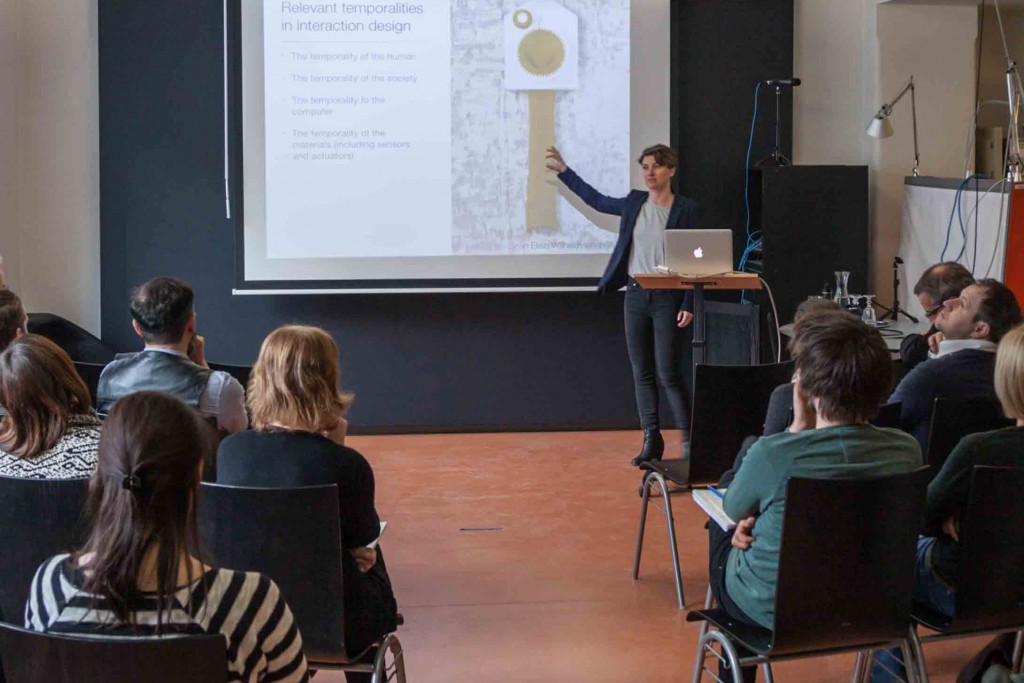
Ass. Prof. Anna Vallgårda: Temporal Form of Interaction Design

Anna Vallgårda, PhD, is the Assistant Professor and Head of the ixd lab at the it university of copenhagen. Her research is about developing interaction design as a material practice. Dr.Vallgårda understands the computer as a material for design and experiment with it as such, with the aim of creating new material expressions for computational things. Through this practice, she also seeks to deepen our understanding of the trinity of forms in interaction design: the physical form, the temporal form, and the interaction gestalt.

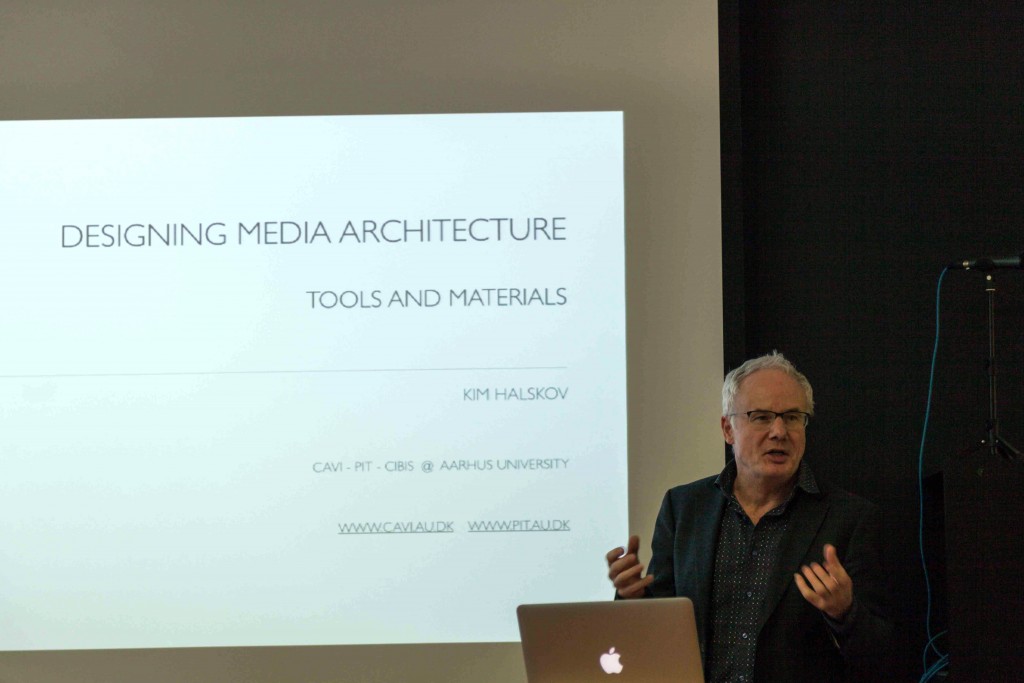
Prof. Kim Halskov: Designing Media Architecture: Tools and Materials

Prof. Kim Halskov is a professor of interaction design at Aarhus University, Denmark, where he is the director of Centre for Advanced Visualization and Interaction (see cavi.au.dk) and also co-director of the Centre for Participatory IT (see PiT.au.dk). From a background in participatory design, Prof. Kim Halskov’s research areas include design processes, participatory design, creative processes, and experience design. His current research project includes CIBIS, which in collaboration with LEGO and Designit, develop and explore Blended Interaction Spaces supporting the creative potential of young people at the high school level. The objectives are 1) to demonstrate the potentials of integrating multiple digital devices and physical materials in a shared environment to support individual and collaborative creativity and 2) to develop the theoretical foundation for the study of creativity constraints, design ideas, generative design materials, and creative methods in design processes. Prof. Kim Halskov is chair of ACM’s steering committee for the Designing Interactive Systems conference series (DIS) and a member of the advisory board for the Participatory Design Conference series (PDC).

Contact: Martin Murer